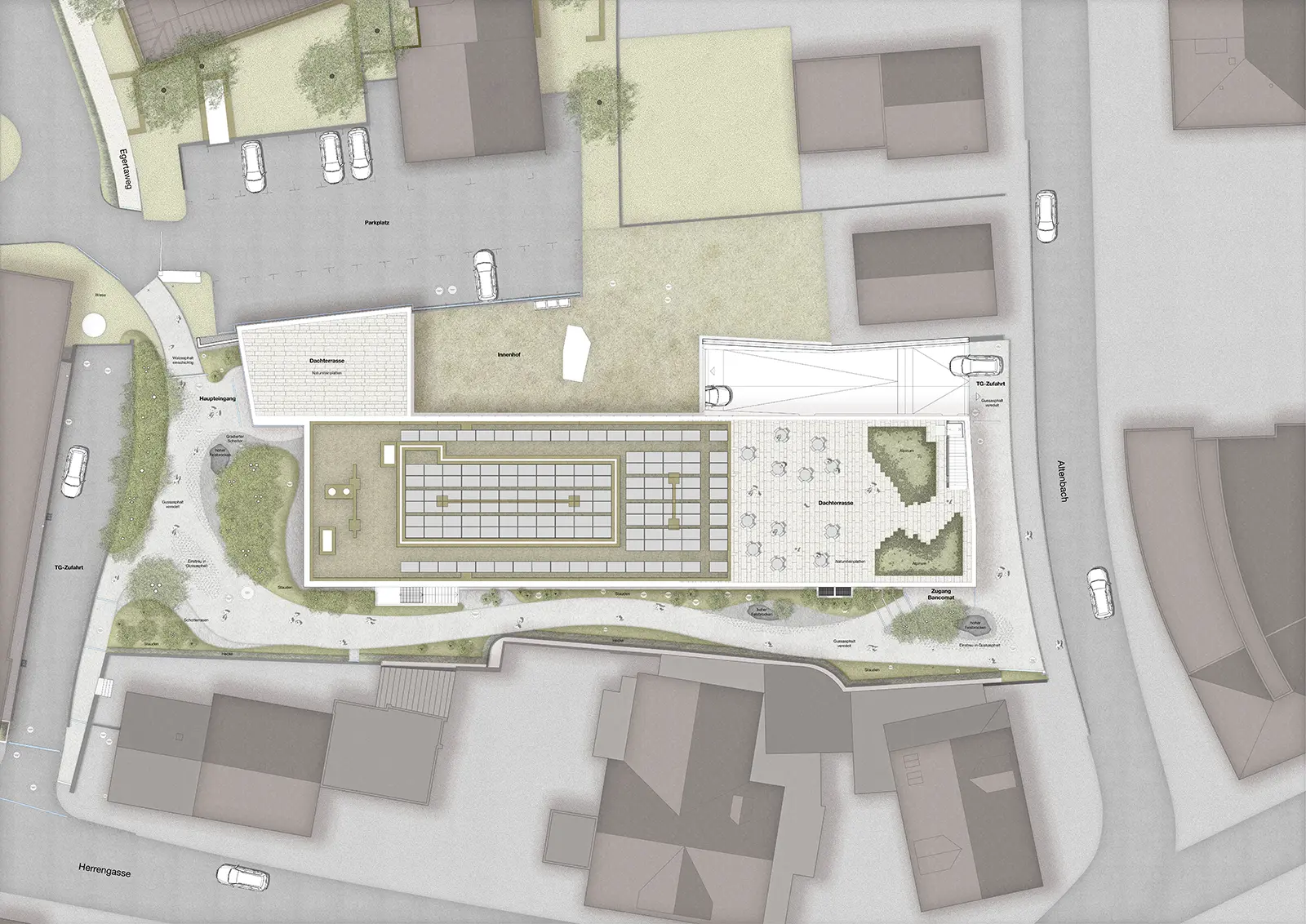
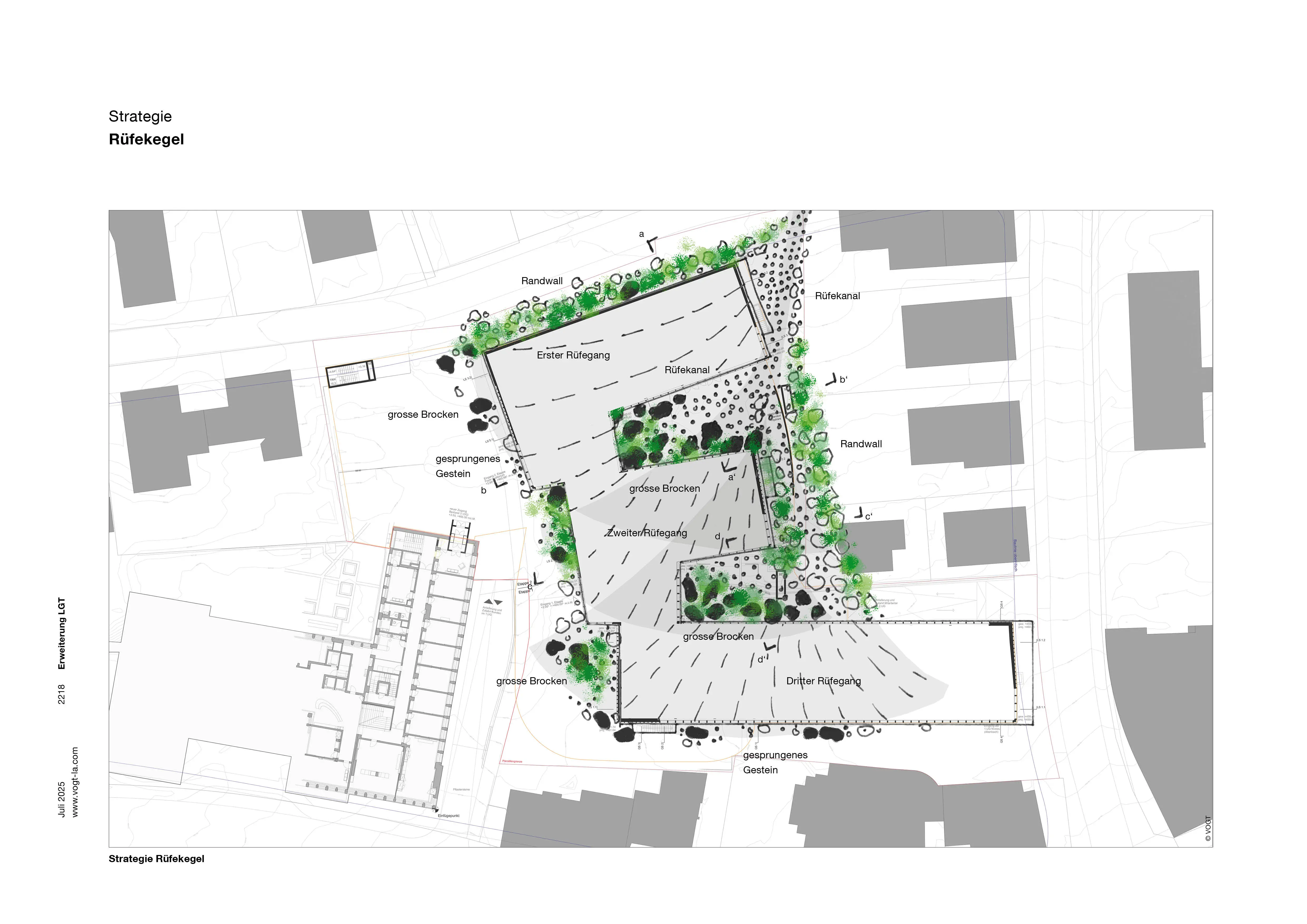
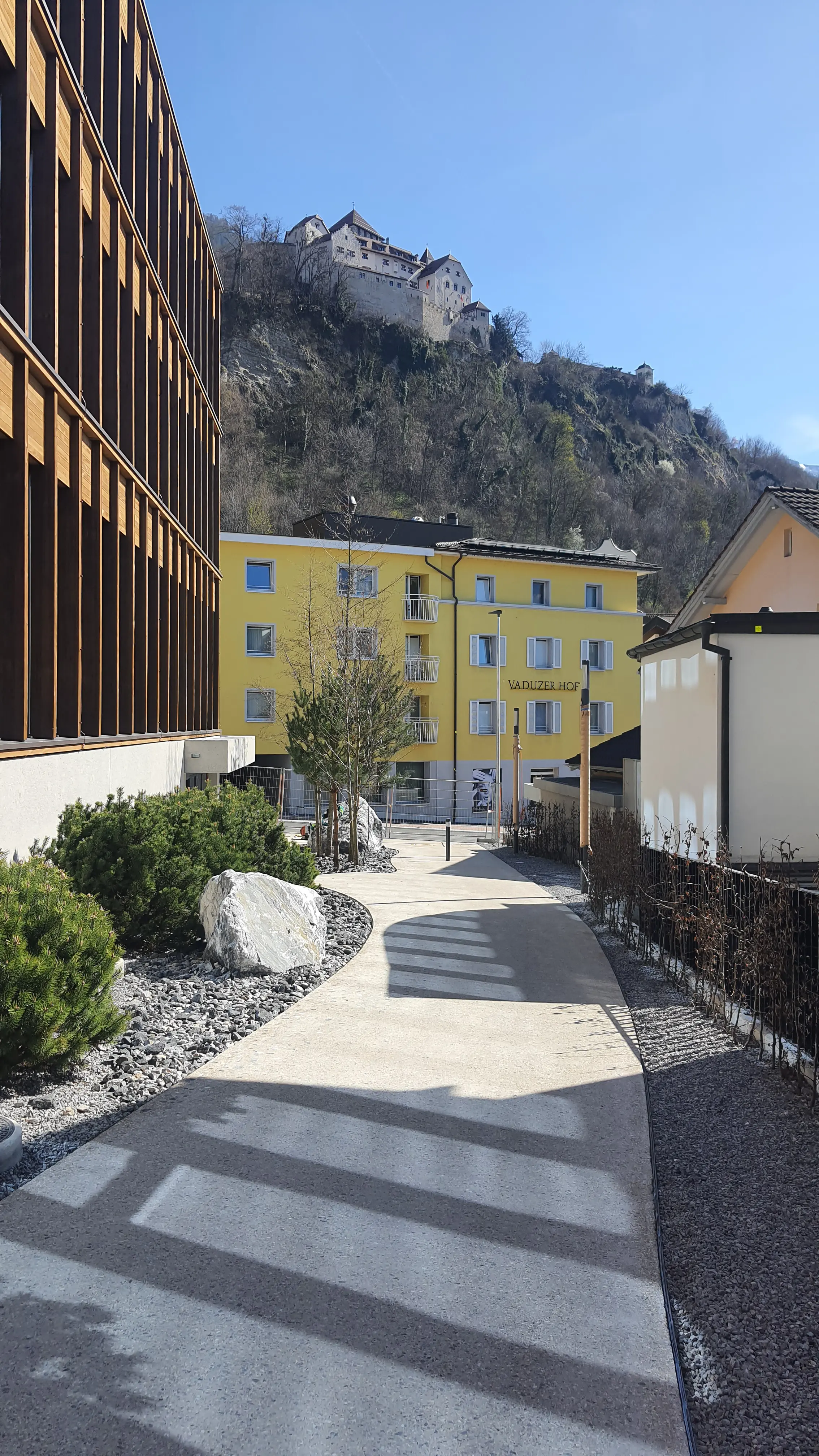
LGT is expanding its headquarters in the centre of Vaduz. Geological investigations show that alluvial sediments of the Rhine were later overlaid by debris flow deposits. The project is thus founded on an alluvial debris cone. A “Rüfe” refers to a mud and debris flow – a rapidly descending current of mud and coarse rock material.
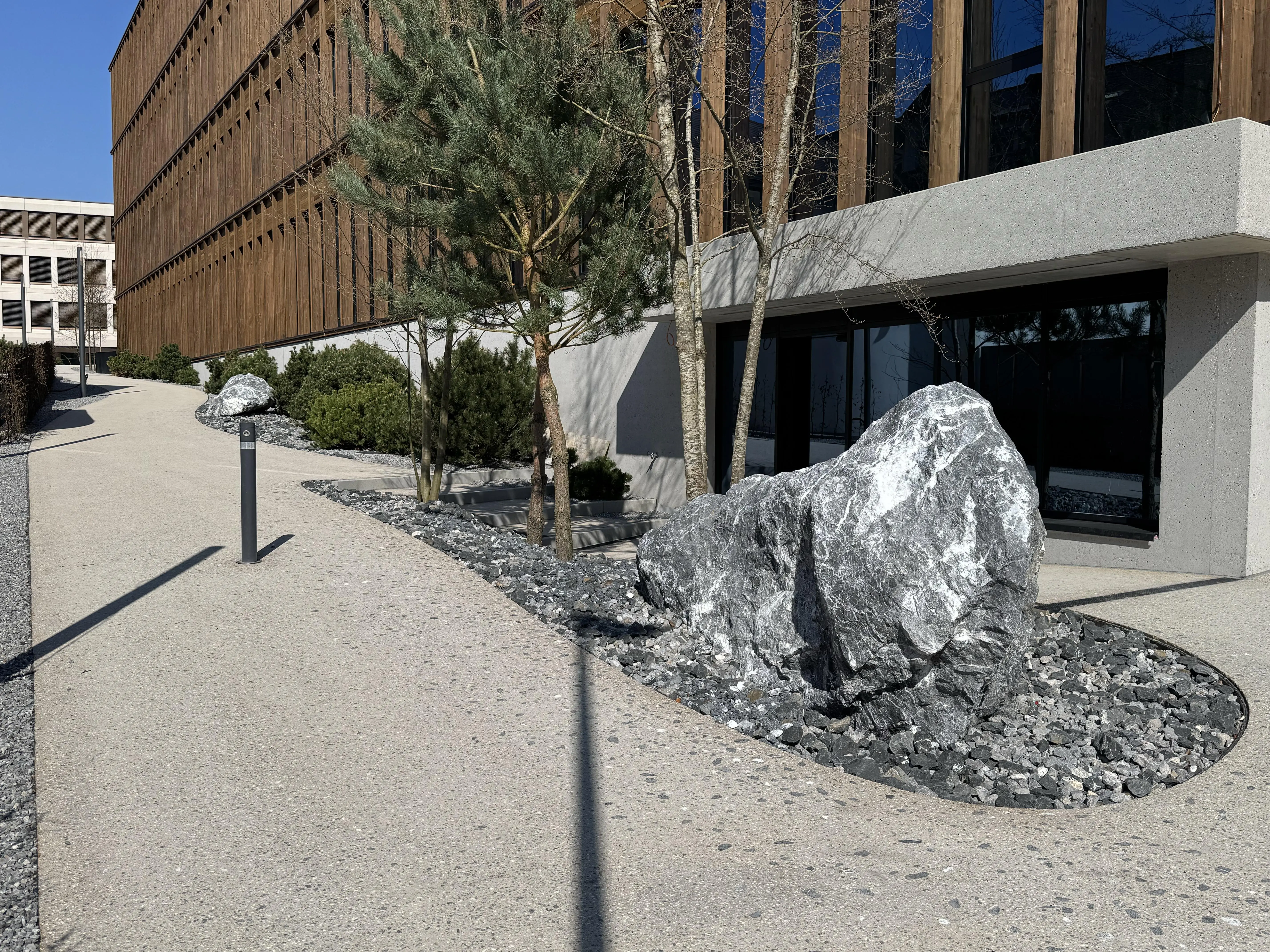
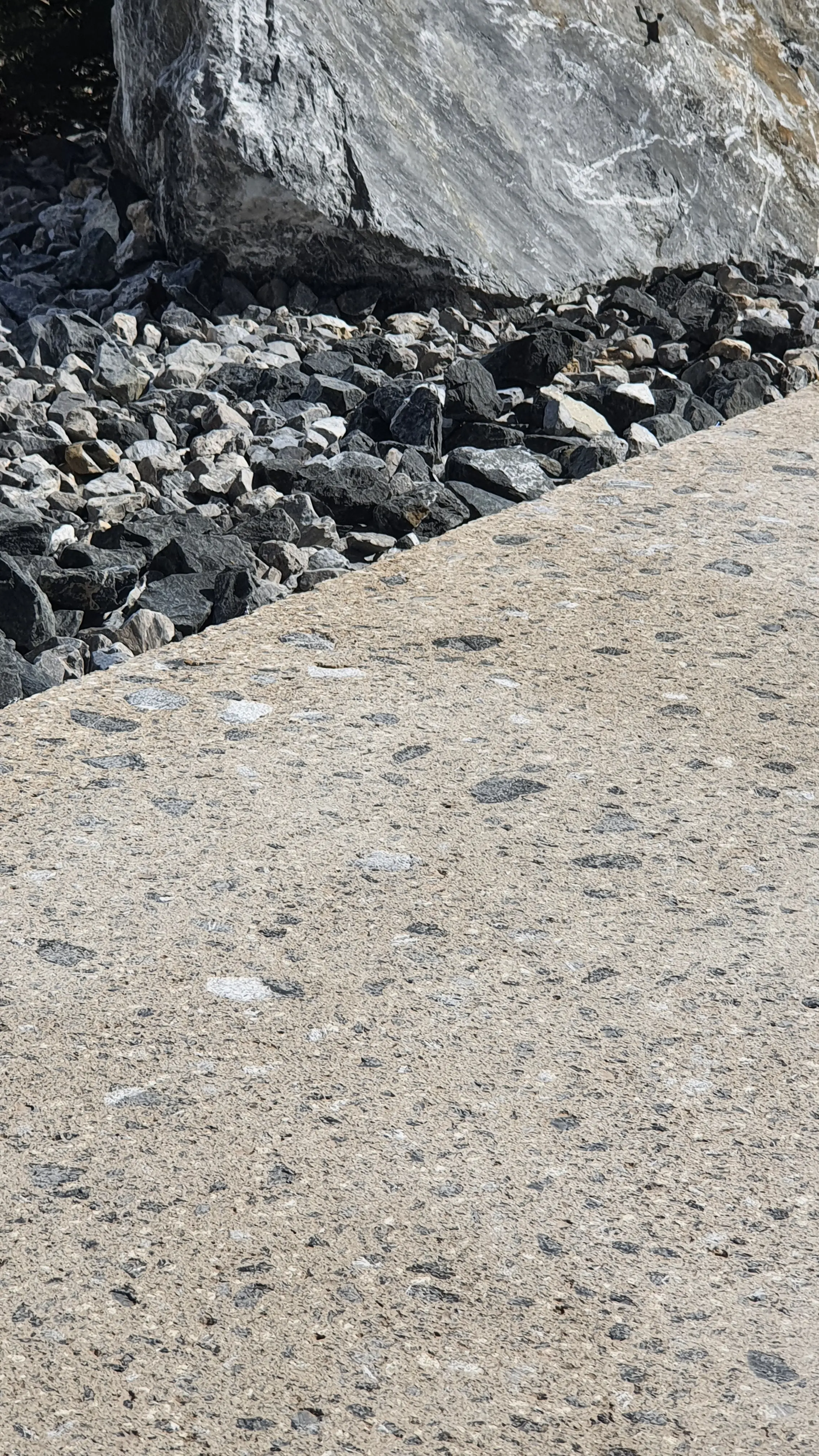
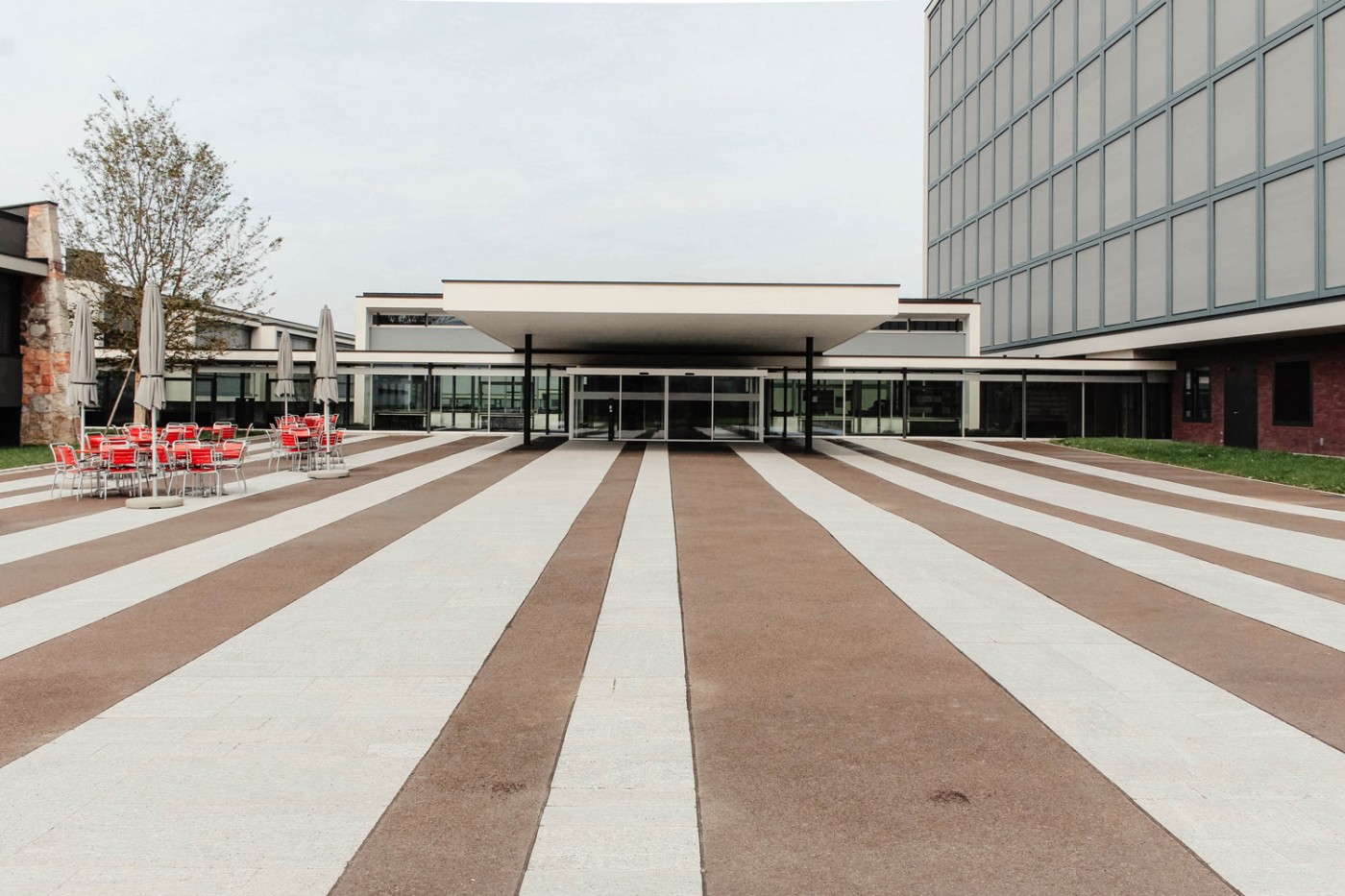
The architecturally articulated exposed aggregate concrete wall in the courtyard takes up this motif and translates it into a contemporary form. With its earthy tone, rough surface and varying grain sizes, it conceals technical requirements while simultaneously becoming part of the landscape itself.
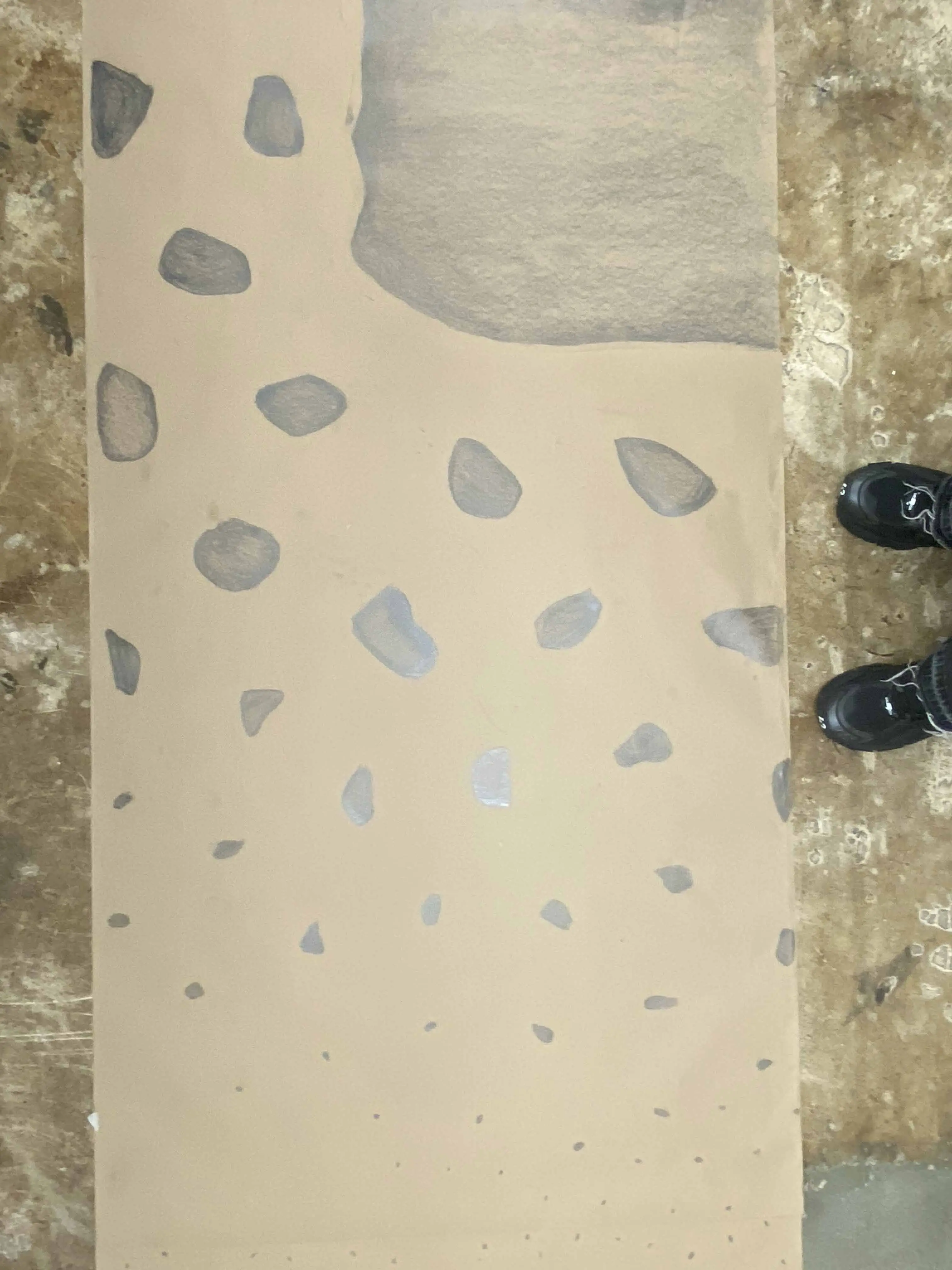
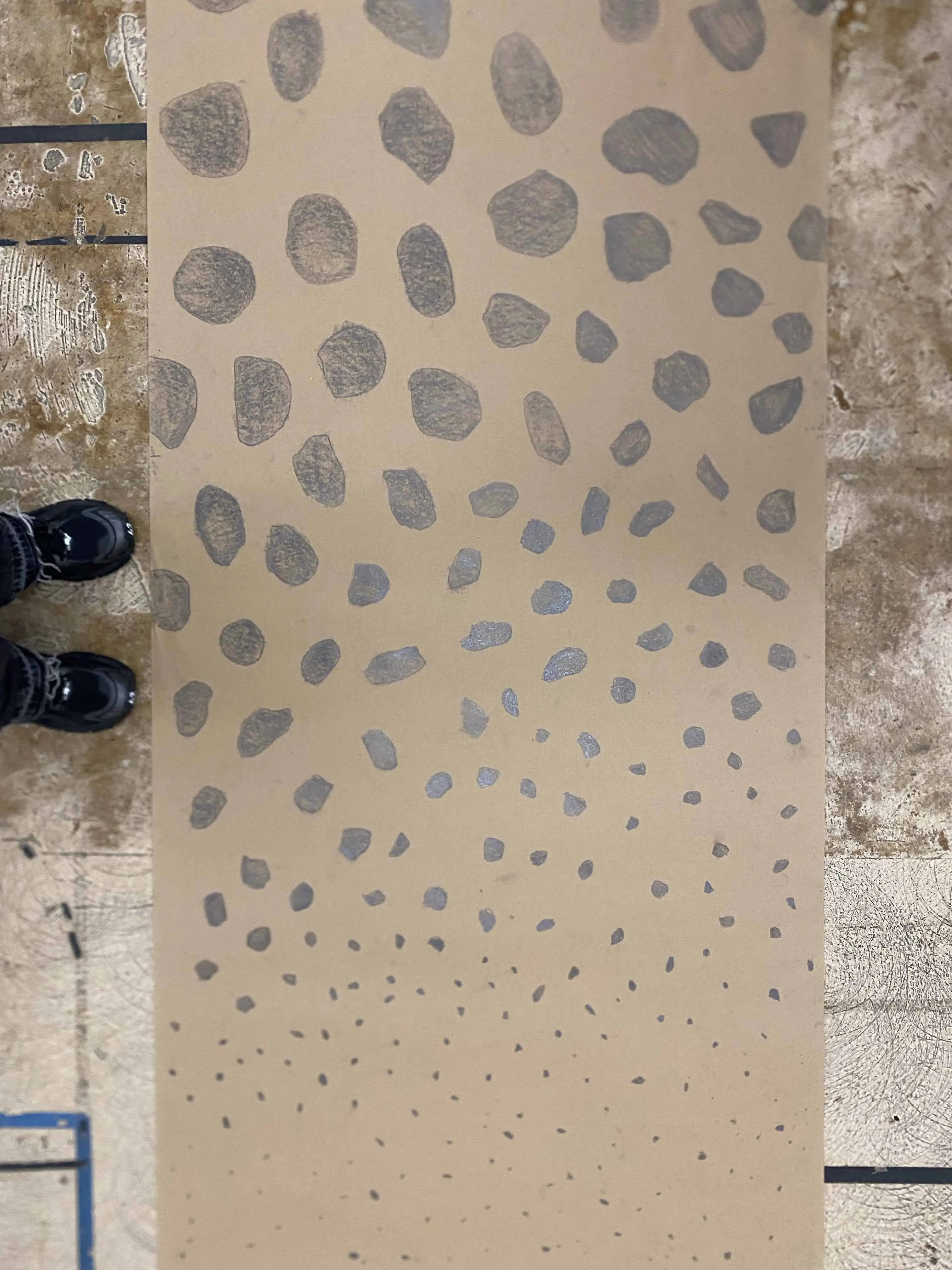
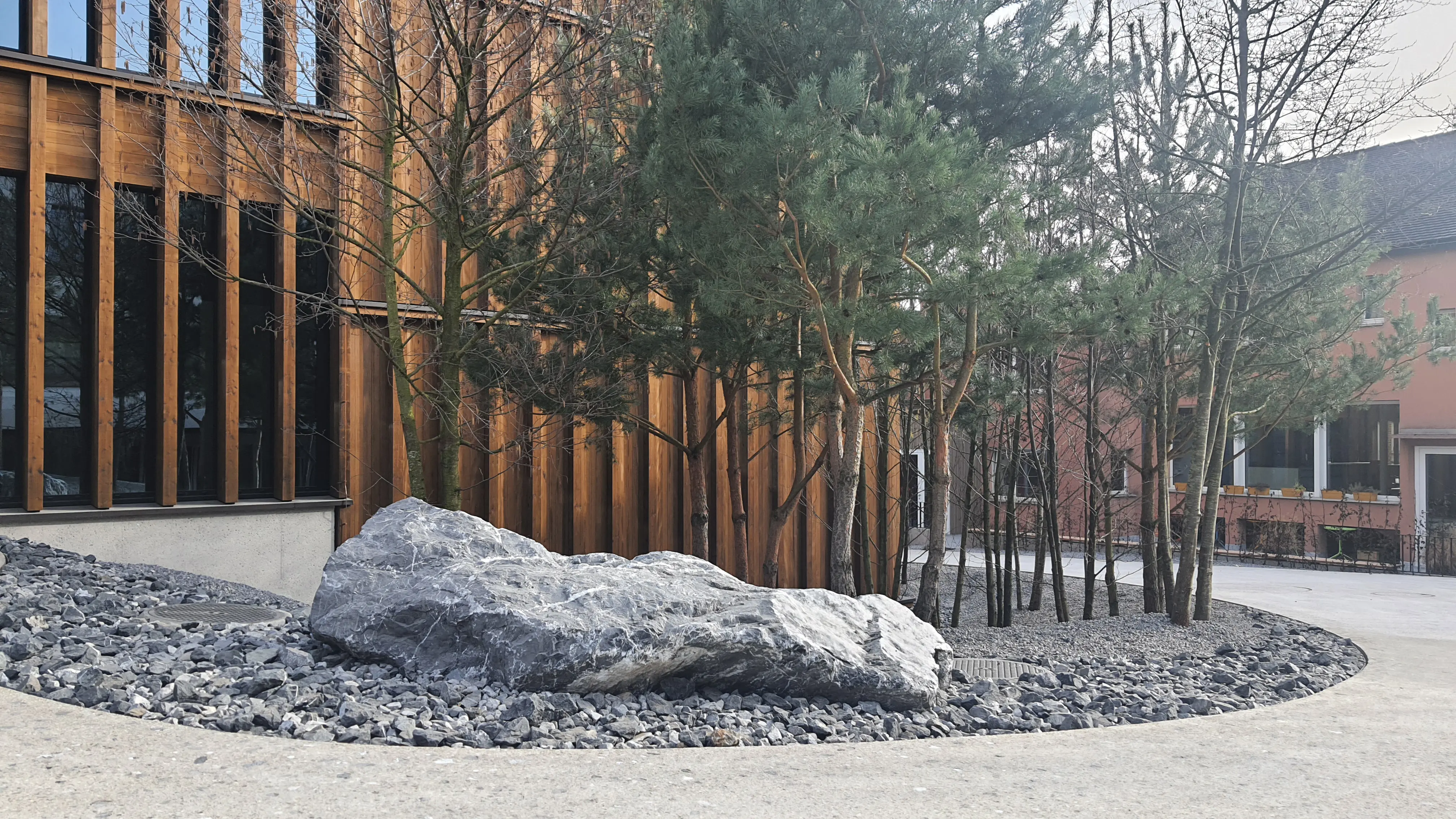
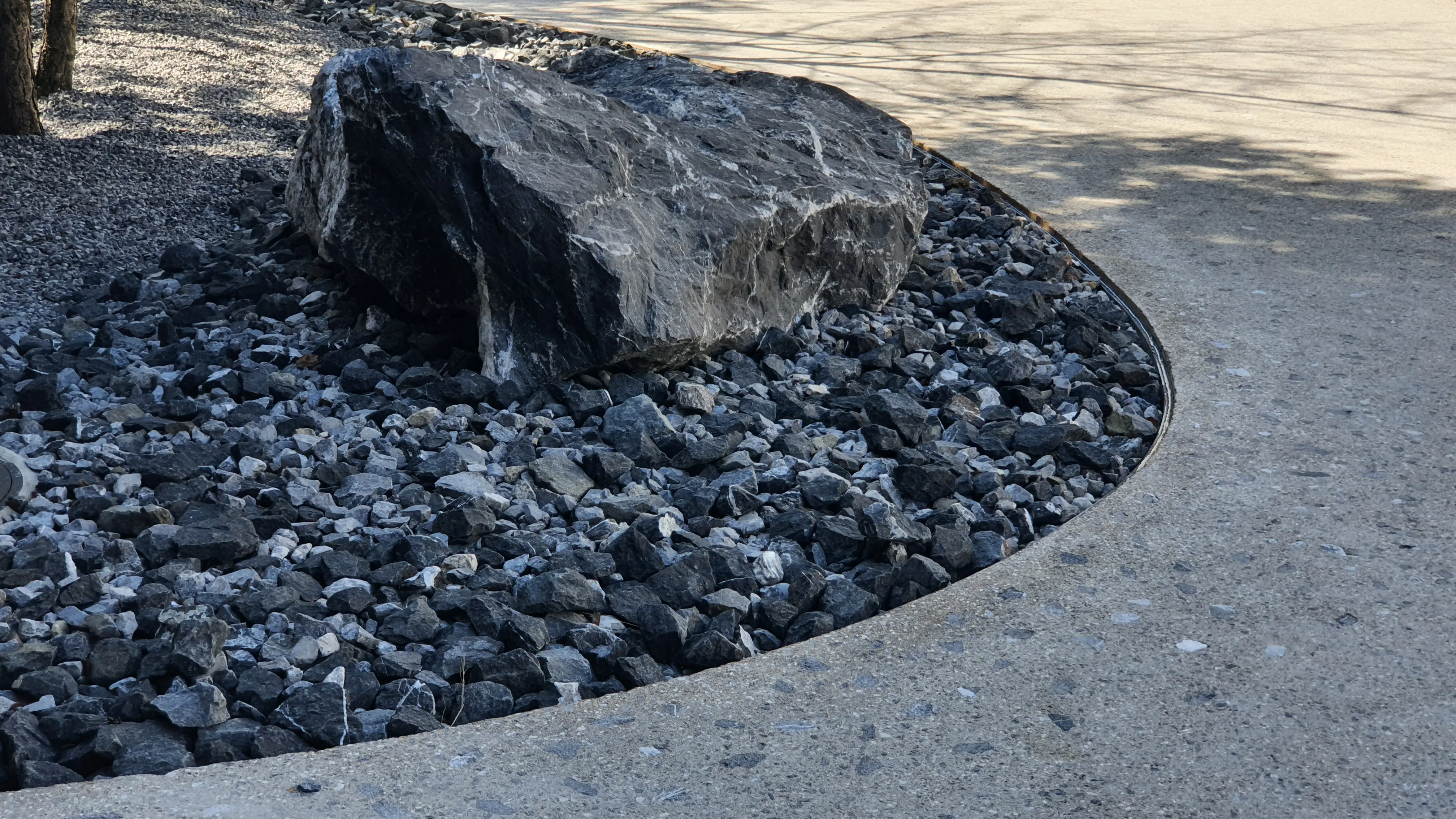
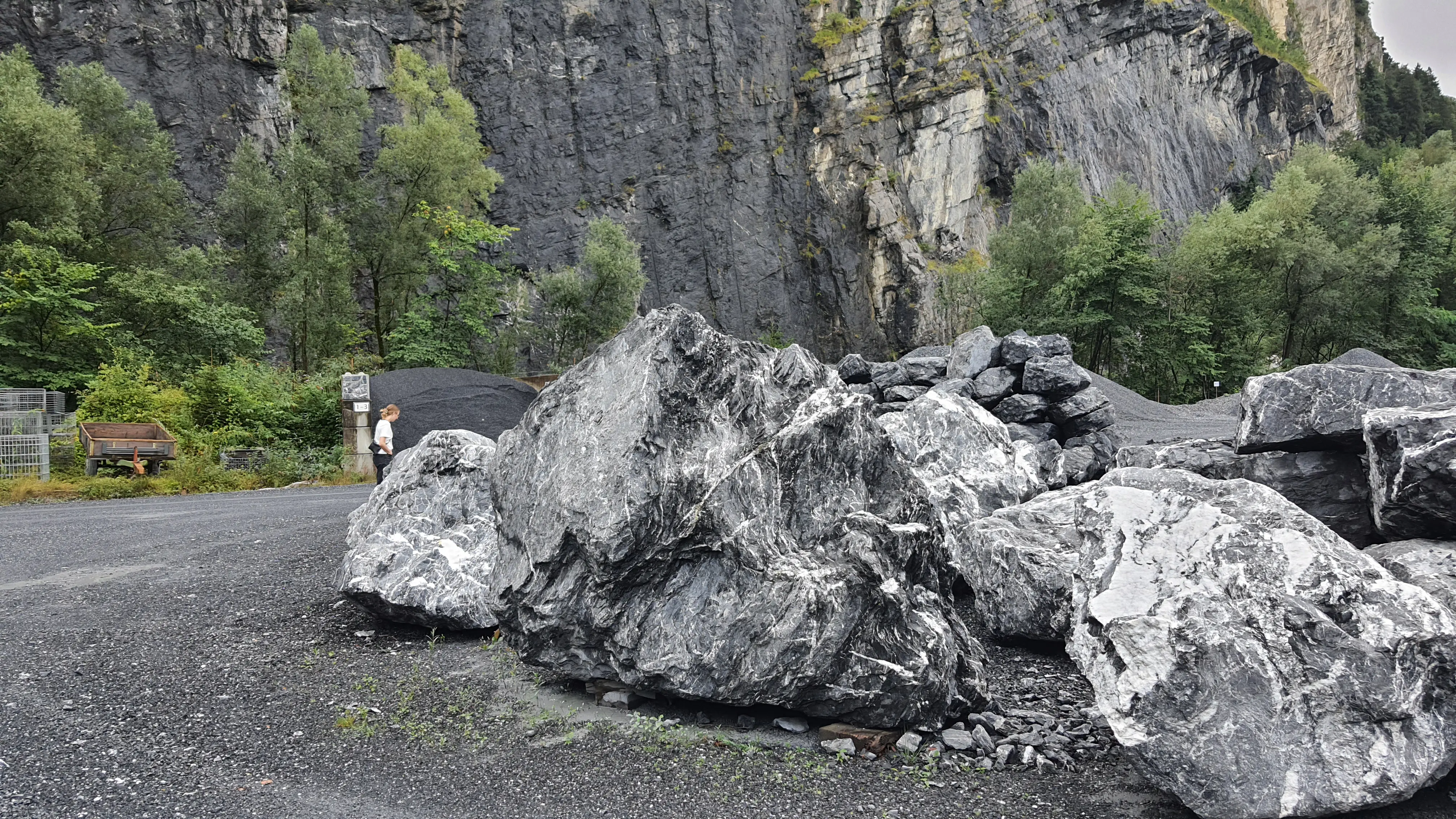
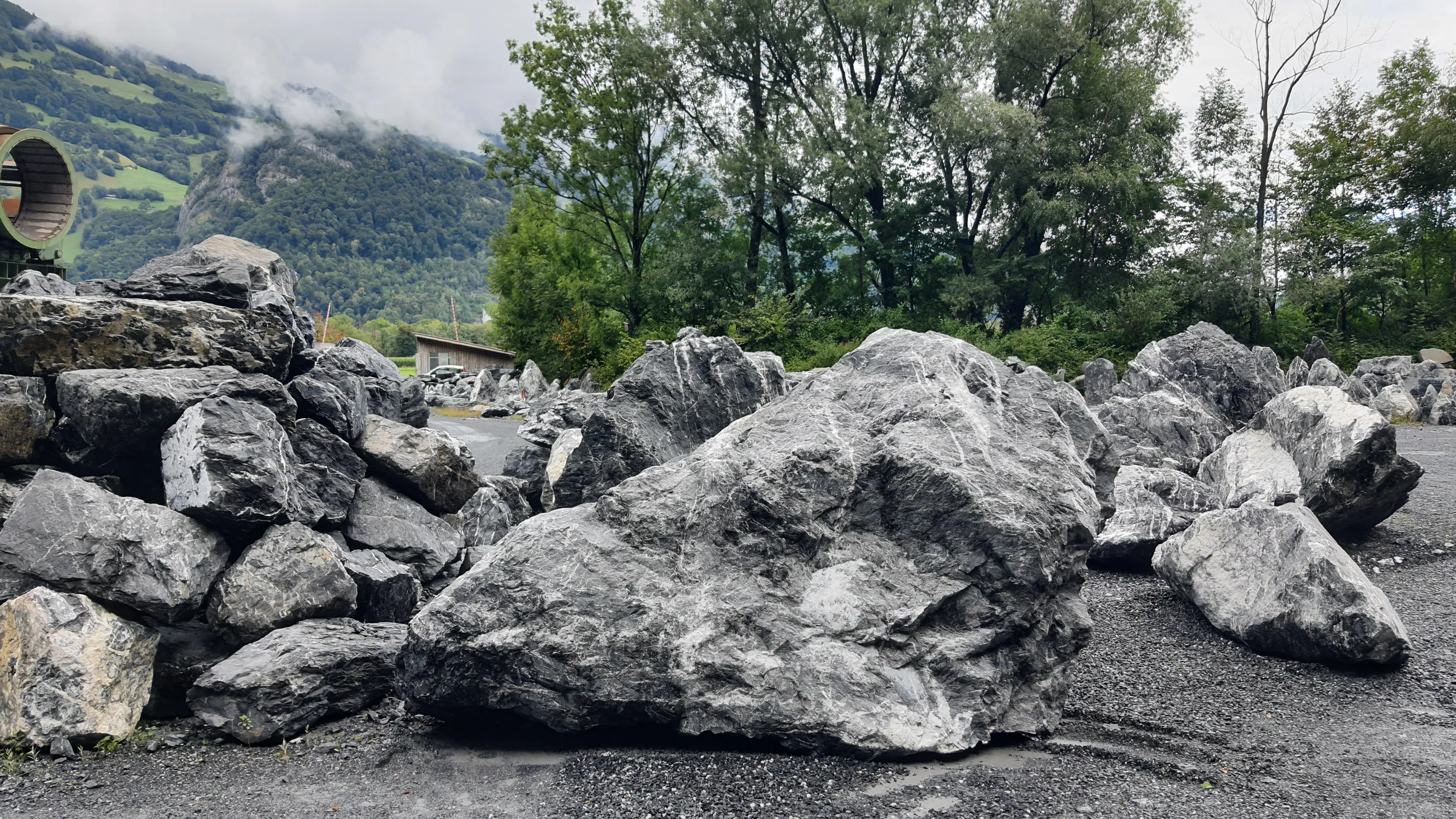
Large boulders, as a reminiscence of the site’s geological evolution, visibly anchor the area within the centre of Vaduz and act as a recurring design element in the open space. As traces of the debris flow, they accompany movement through the site. In scale, surface and colour, they develop a striking physical presence and create a distinctive atmosphere. They relativise the human scale, invite pause, and recall the power and beauty of nature.
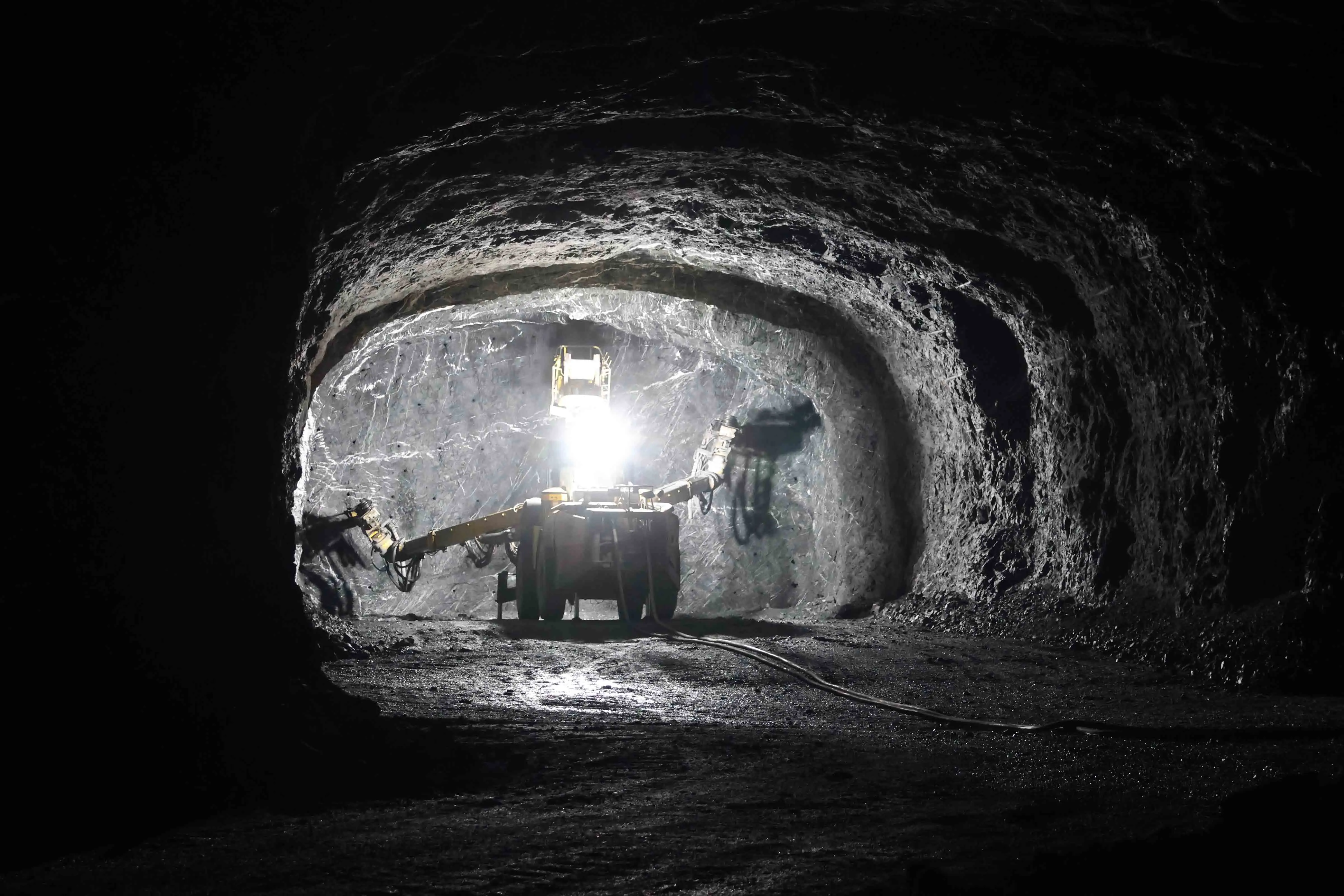
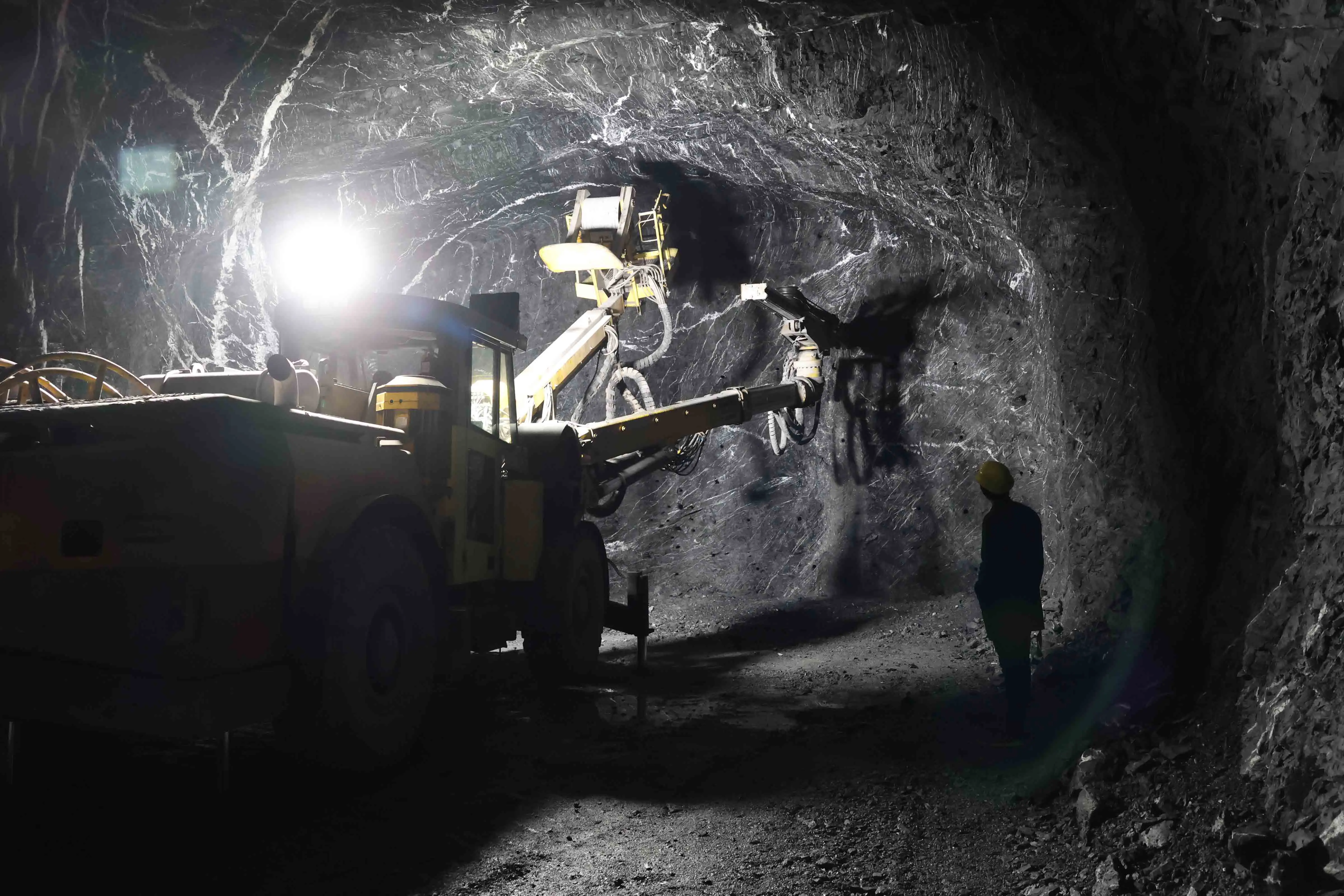
Material eroded and broken off from the boulders reappears in both bound and unbound surfaces. With its low albedo, the paving meets sustainability requirements as well as the criteria for barrier-free public access. Surface treatments reveal the diversity of the stone’s grain sizes.
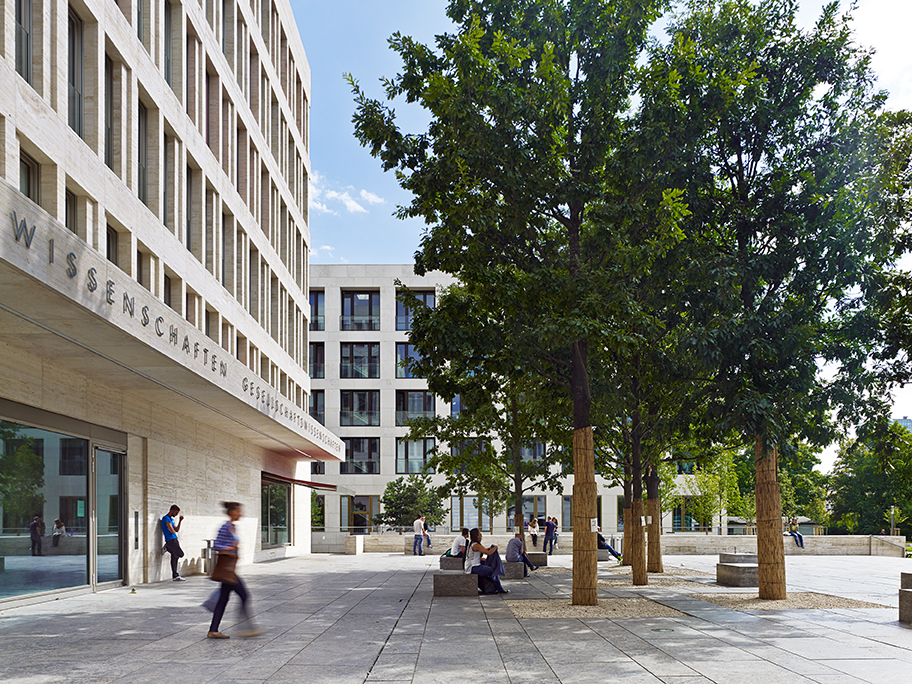
Planted in closely spaced groups, pines and alders compete in high density, with varying ages, sizes and growth forms, establishing hierarchy within the plant community. The diversity of species and varieties enhances both the aesthetic quality and the resilience of the tree groups. They function simultaneously as screening and as focal points.
Shrub-like mountain pines, together with an understorey of ruderal perennials and ferns, reinforce the differentiated impression of a landscape either untouched by debris flows or already regenerated through succession following their destructive impact. Areas of graded gravel, gravel lawn, and ground not yet colonised by vegetation likewise act as metaphors for the local landscape and its natural processes.
Alpinum
On the third floor, the roof terrace opens up with views towards Vaduz Castle. Employees and guests can spend time here outside the canteen and enjoy meals, with expansive views across the city, the Rhine Valley and as far as Mittagspitz to the south.
Here, too, the local landscape serves as the source of inspiration. In contrast to the ground level, however, the focus shifts to Liechtenstein’s high alpine peaks. Large-format natural stone slabs, precisely worked and set in a clear, orthogonal arrangement, create generous surfaces for everyday use as well as for events and receptions.
The composition is complemented by broken rock material of Balzers marble, arranged in a loose, natural manner and planted with alpine vegetation. As an expression of cultivated landscape within a mountainous context, the alpinum—conceived as an abstracted landscape—forms a deliberate contrast to the strictly ordered stone slabs in terms of materiality, form, treatment and scale.
Through the interplay of vegetation and mineral elements, layered micro-landscapes emerge, evoking both the specific qualities and the vastness of the local alpine environment. The vegetative and mineral characteristics of the landscape become sensorially tangible and fundamentally shape the space. Built and grown elements merge into a landscape conglomerate.




 Newsletter